Free software is software you can use, share, modify and redistribute. Open printer plans to use a rpi zero w. The rpi zero w requires non free software in order to work. The question is, can you replace the rpi zero w with a beaglebone black such that the beaglebone black runs a free software gnu linux system? It appears the open printer will rely on cups software, which has a free software license. Thanks.
Sure why not, it’s linux in the end… (No WiFi/Bluetooth out of box on BBB)
Please do feel free to share a writeup when you do it..
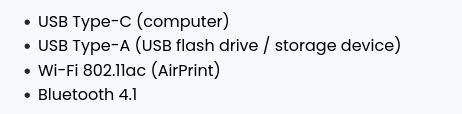
They don’t state the communication channel between the STM32 and PI at this time.
Regards,
Try this one
i bet the closed ‘firmware’ of the wl1835 will putt off poster..
Regards,
Yes, it’s not easy being a purist in today’s software landscape.
That being said, I also detest all the binary firmware blobs
nearly as much as chip datasheets under NDA wraps;
it really shouldn’t be necessary in this day and age.
Side question then, what about the various firmware that gets loaded into the kernel so am335x-bone-scale-data, am335x-evm-scale-data, am335x-pm-firmware, regulatory.db. IIRC I load three of these into the kernel, and some are needed - like the firmware for the M3, which is needed to bring up the main cores properly, and so is kinda essential. Yes the firmware is available from TI, but is it open? I’m not sure myself …
m3 power firmware - which is under a Open Source Materials license … so kinda open.
The full firmware - this is the full firmware, can’t see the license.
The M3 firmware is weird, it’s open as far as source available, but under a ti license. As you found they have the second repo with the bins built for easy usage.
Forgot the weird branches…
This branch has the bins we use and full source : processor-firmware/ti-amx3-cm3-pm-firmware - Consolidated central location of various TI firmware source and binary projects hosted previously in various locations.
not easy being a purist in today’s software landscape.
A lot of computing is covered by free software. What frequently has non free software implications is hardware. Therefore it is important to act on every option to get hardware able to run entirely on free software. The open printer might be such an option.
Your link
states a license. Does that license also govern the m3 firmware?
The license in that repo talks about the object files..
Reflected on this whilst at the allotment yesterday when digging earth.
From a hardware perspective, the design of the am335x hardware with an M3 processor as well as the main cortex A, means a natural form of going to sleep and low power, is to power off the whole cortex A, and just leave the M3 running. This is a natural solution - it make sense.
But for implementation, this means code running on the M3. Naturally TI developed the code that runs on M3, as this demonstrates that the M3 can be used for low power states - so the software provides the example of the hardware implementation of low power mode of the am335x chip.
Now writing code to the M3, isn’t hard from a coding approach - compilers for M3 are easy to get, how the M3 interacts with the cortex A I haven’t checked - but suspect its in the TRM, so such code could be written in open code. But this has never happened - the AM335x is a bit of a niche product; for many years now it has only really existed in the beagle family, and even in the beagle family the am335x design are old now (what is it 15 years or so?) - not where the main focus is.
So what is the motivation to develop open M3 code, well code could be done, but why spend the effort on an old chip, that is close to extinct - is it really worth someone spending the time. On the other hand, TI could completely open the code, this is something it does - e.g. It supports the linux kernel drivers for TI chips, the maintainer for most bits of code is a TI employee. Now with kernel code this has to be made open, it won’t go into the kernel otherwise. But the same can not be said for the M3 code on the AM335x, there is no similar pressure to make the code open - and even doing this (if TI was motivated) would take time and effort (e.g. probably involve TI commercial department) - and for the for an old processor, why would they spend the time?
So gut feeling, the M3 firmware is what the M3 firmware is - it exists and works, and is on a license.
Then again, not using the M3 and maybe the Cortex A can work without loading anything to the M3? So for a completely open kernel, couldn’t the firmware be left out? The same could be said for all the firmware blobs - probably the linux would survive without any of them. So I support could just recompile the kernel without these blobs. Is this maybe the direction to go in for a completely open platform?
1 Like
And that interesting - just check my BBB, and its running the M3 firmware v192, but here is v193 release, I’ll have to update my tree!
And looking more at the tree, yes its very odd - something strange going on!
This seems the link for v193.
TI never moved on from branch: “ti-v4.1.y” processor-firmware/ti-amx3-cm3-pm-firmware - Consolidated central location of various TI firmware source and binary projects hosted previously in various locations.
Yes the v193 is ti-4.1.y-next branch, so planned for a future release. But the latest commit to the branch is 18 years ago - so the release process has stalled. So question then is whats the status of the v193 tag, is it just an orphan left out in the wild to die?
am335x design are old now (what is it 15 years or so?) - not where the main focus is.
I am investigating what free software computers may replace a rpi zero w. And my information is, that options are few and far between. I am not going for the beaglebone black should there be better options. Right now the only options I can come up with is beaglebone black, olimex a20-olinuxino-lime2 and rockpro64.
Hmm interesting question. These days most boards seem to have some firmware blobs - just down to how they are done.
If doing this rigorously, I’d look into what closed or at least licensed software is used on a shortlist. Then ask what is the impact of leaving out that firmware. Then if no hardware comes by default as all free, look at building a slightly non standard version if the OS which doesn’t have any licensed software on it.
So on the Beaglebone black, its mainly video and the various firmware blobs. The video, and I think most users don’t use it - e.g. I’m not sure if it is installed on my BBB, certainly I never plugged in a screen.
The blobs that go in the kernel, and you’ll need to look into each. It looks like all the ones from TI are under a license that lets you use it - but its a license non the less. The registry blob, IIRC is a wifi bob - and I don’t know its license. If wifi its easy to leave out. The M3 firmware is mainly for the low power modes, so if not using these could be left out. You’ll have to check the others.
This gives two hassles, the BBB is ancient now, finding information on it - and its quite thin now. This said TI is one of the good companies, so if there is any documentation its probably available if you look long enough.
The second hassle - is you’ll have to compile the kernel. So you’ll need to install the full development chain, then recompile the kernel.
So you can see - its important to ask yourself how pedantic you want to be for each license. I suspect though probably most hardware will use some IP, so you’ll probably have to look into what - nad how important it is.
Readme: Making sure you're not a bot!
wireless-regdb.git : Making sure you're not a bot!